Easylim
One workspace instead of five tools
- Industry
- Productivity SaaS
- Year
- 2023 — ongoing
- What we did
- Own product: design, web app, real-time server, infrastructure, marketing site
- Live
- easylim.com
- Site languages
- UK · EN
- Features in one workspace
- 100+
- Modules with their own page
- 21
- Languages, product and site
- 2
Overview
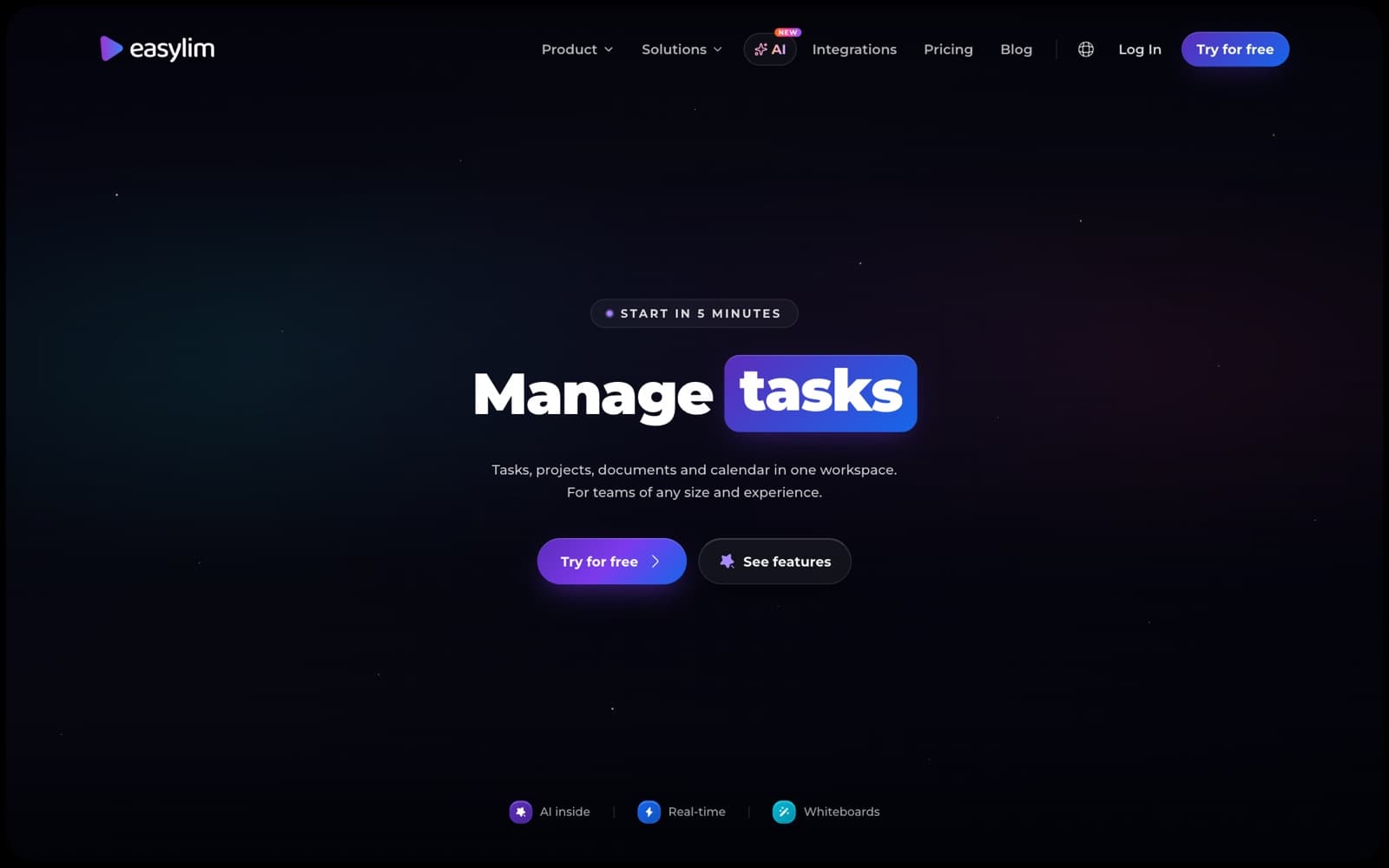
Easylim is Limgro's own product: a workspace where a team keeps tasks, projects, documents, whiteboards, calendar and time tracking in one place instead of five separate tools. We designed and built all of it — the web app, the real-time collaboration server, the infrastructure and the bilingual marketing site.
- Task tracker
- Docs
- Whiteboard
- Calendar
- Time tracking
- Board card
- List row
- Calendar entry
- Gantt bar
01 — Challenge
Small and mid-size teams usually glue together a task tracker, a wiki, a whiteboard, a calendar and a chat, and pay for each one. Replacing that stack means one data model has to serve very different views — a board, a timeline, a document — without any of them feeling like a compromise. And it had to be priced for teams in Ukraine, Europe and the US at the same time.
02 — What we built
We built the product on Laravel 12 with a GraphQL API and gave every company its own PostgreSQL database. A task is one entity shown as a board card, a list row, a calendar entry and a Gantt bar; documents and whiteboards sync live through a separate Yjs and tldraw server. AI features split tasks, draft whole projects and draw diagrams on the whiteboard.
03 — Result
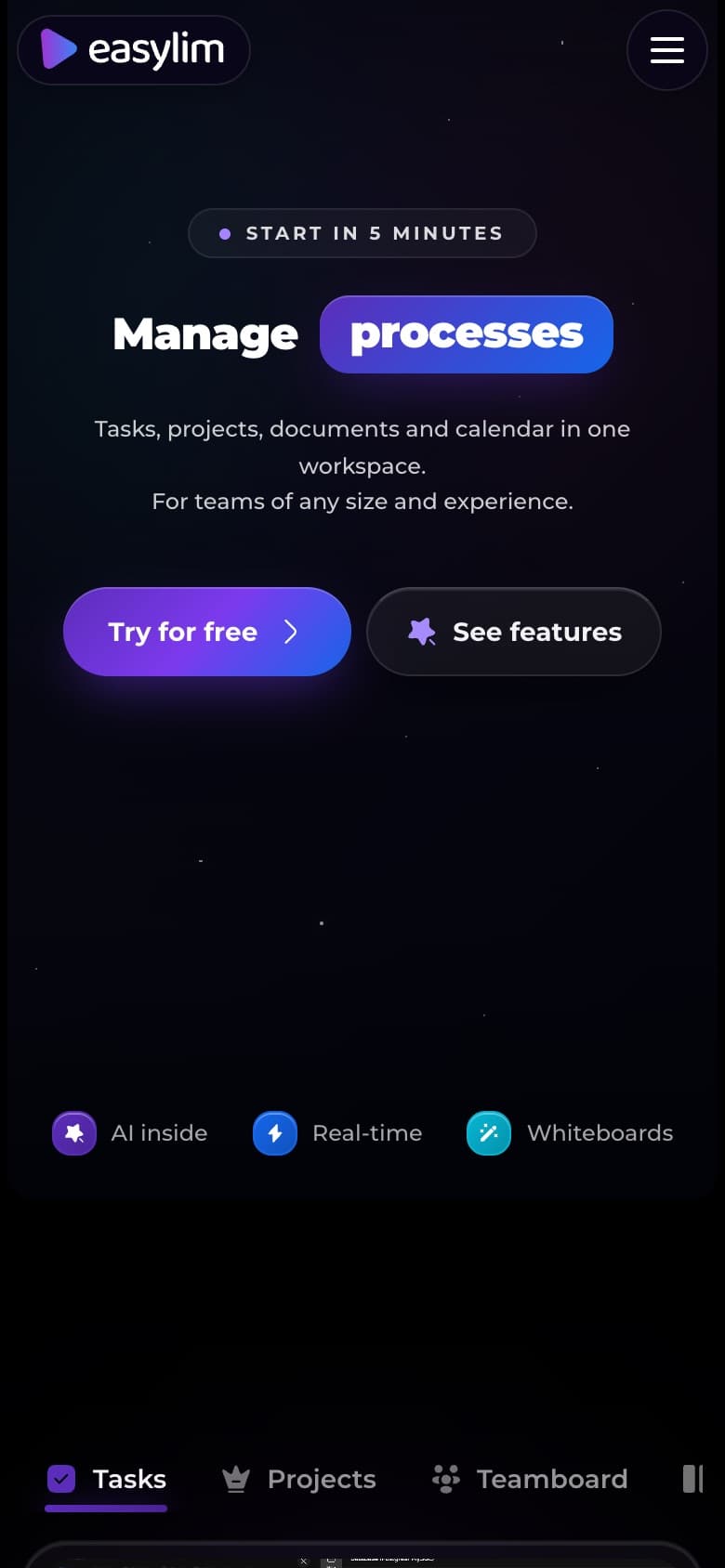
A working SaaS with 100+ features, a free plan and paid tiers up to Enterprise with a self-hosted option, in Ukrainian and English. The marketing site carries 21 feature pages, 9 industry pages and 8 comparisons in both languages, with prices chosen by the visitor's region.
The project at a glance
Each project opens on a dashboard: what was done, updated, created and due this week, the status and priority mix, and the load on every person. It reads the same tasks as every other view, so the numbers never need syncing.
- Done, updated, created and due in seven-day windows
- Status and priority charts per project
- Team workload by assignee and by task type
One task, many views
The same task is a card on the kanban board, a row in the list, an entry in the calendar and a bar on the Gantt chart. Statuses, task types and fields are set per project, so a content team and a dev team each get a board that fits.
- Board, list, calendar, Gantt and teamboard per project
- Custom statuses, task types, tags and deadlines
- Project templates for marketing, SMM, CRM and more
Planning on a timeline
The Gantt view turns the same tasks into bars linked by dependencies, so a slipped date shows what moves after it. Recurring tasks, time tracking and team timesheets cover the rest of the planning job.
- Dependencies drawn between tasks on the timeline
- Week and month scales with a jump-to-today button
- Recurring tasks and team timesheets alongside
Docs and whiteboards, edited live
Documents and wiki pages live inside projects, with a page tree, a rich editor and code blocks. Several people can edit the same page at once — changes sync through a dedicated real-time server, and whiteboards work the same way.
- Nested pages with a rich-text editor and code blocks
- Real-time co-editing over Yjs, with presence
- Shared whiteboards with AI-generated diagrams
Key decisions
- Every company gets its own PostgreSQL database through stancl/tenancy, so one workspace's data never shares tables with another's.
- Documents co-edit through Yjs and whiteboards through tldraw sync, both on a separate Fastify server backed by Redis.
- Fourteen task and workspace events are broadcast over Pusher channels, so open boards update without a reload.
- The marketing site reads Cloudflare's country header on the server and renders a US, EU or Ukrainian price table — no client-side flicker.